
How to Enhance the Wear Resistance of O-rings?
There are many types of O-rings, and users should choose according to their actual needs. However, wear is unavoidable during use. To reduce wear, it's necessary to enhance the wear resistance of the O-ring itself. So, how can we enhance the wear resistance of O-rings?
1. First, we need to appropriately increase the hardness of the rubber: Theoretically, increasing the hardness of natural rubber can enhance its resistance to deformation, allowing for uniform contact between the O-ring and the contact surface under stress, thereby improving wear resistance. The hardness of fluororubber O-rings should not be too high, otherwise the elasticity and cushioning effect of the O-ring will be affected, thus impacting its wear resistance.
2. Second, adjust the degree of vulcanization: Reasonably adjust the vulcanization system and parameters of the natural rubber O-ring. By increasing the degree of vulcanization, the wear resistance of the rubber O-ring can be improved.
3. Adjust the elasticity of the rubber: Appropriately increase the elasticity of the natural rubber, reduce the viscosity and hysteresis of the rubber compound, decrease the coefficient of friction, and improve the wear resistance of the O-ring.
4. Improve rubber tensile strength: When using natural rubber as a raw material, the use of fine-particle rubber fillers in the formulation can increase the intermolecular forces, thereby improving the tensile strength and tensile stress of the rubber compound, which can increase the wear resistance of natural rubber to a certain extent.
- Reduce the surface friction coefficient of natural rubber seals: Adding small amounts of graphite, molybdenum disulfide, and other materials to the formulation can reduce the surface friction coefficient of rubber seals and enhance their wear resistance.
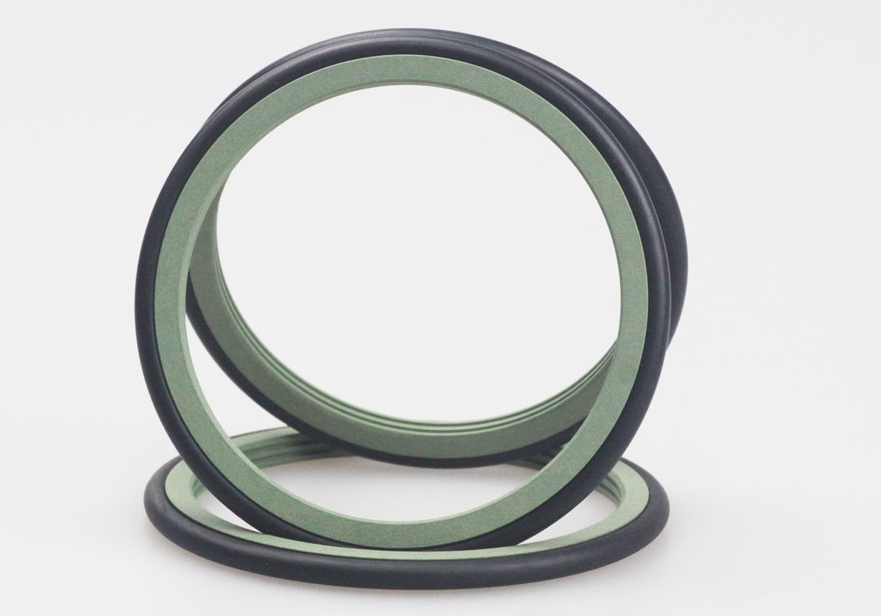
How do Glyd rings achieve reliable sealing?
Influence of PTFE Filler Morphology on Friction and Wear