
Why is Compression Rate So Important?
The "Breath" of O-Rings: A Look at Compression Rate
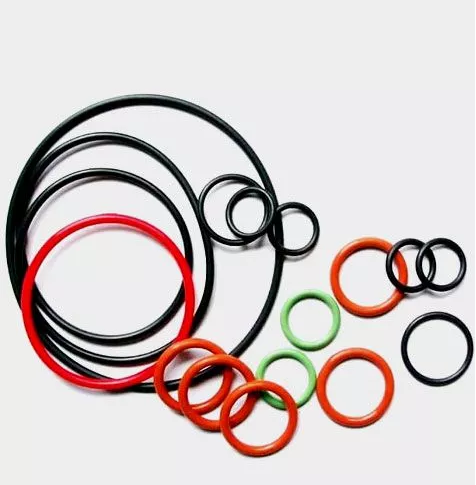
In industrial sealing, the O-ring may be the most unassuming yet critical component. The key factor determining its sealing performance is none other than the compression rate. You can think of it as the "breath" and "vitality" of an O-ring.
1. What Is Compression Rate?
Simply put, the compression rate is the percentage of radial deformation of an O-ring after being installed and compressed in a groove.The formula is straightforward:Compression Rate = (Original Cross-section Diameter − Groove Depth) ÷ Original Cross-section Diameter × 100%
It is not merely passive physical deformation, but the "active" effort of the O-ring to fill the sealing gap and establish effective sealing pressure.
2. Why Is Compression Rate So Important?
Foundation of Sealing Performance :Only when the compression rate reaches an appropriate value can the O-ring generate sufficient contact stress to exceed the working pressure of the medium, thus achieving a tight seal. Insufficient compression leads to inevitable oil or gas leakage.
Guarantee of Service Life :The compression rate directly affects the durability of the O-ring. Excessive compression keeps the O-ring under long-term high tension, accelerating material fatigue, heat buildup, and permanent compression set, resulting in early loss of elasticity. Too little compression, on the other hand, cannot ensure long-term sealing reliability.
3. What Is the Optimal Compression Rate?
The core principle is that too much or too little is equally harmful.
Static Sealing: Recommended compression rate is generally 15% – 25%.This range ensures excellent initial sealing while maintaining long-term resilience.
Dynamic Sealing: Requires more careful design, with a recommended rate of 10% – 15%.Continuous friction and extrusion in moving applications make excessive compression likely to cause overheating, abrasion, or rapid wear.
4. Key Tips for Selection and Design
Groove Design Is Fundamental :The compression rate is calculated based on groove depth. Always refer to standard groove tables according to the O-ring cross-section diameter and sealing type to keep the compression rate within a reasonable range.
Material Properties Set the Limit :Different materials have different resistance to compression set.For example, FKM offers high temperature resistance but relatively poor compression set resistance, so it should not be over-compressed. PU (Polyurethane) can withstand higher compression rates.
Operating Conditions Determine the Final Design
Temperature, pressure, and chemical corrosion all affect O-ring performance. At high temperatures, materials tend to soften, so the compression rate should be properly reduced to avoid over-compression.
PTFE Material Introduction (Pure vs Filled)
Step Out of the Comfort Zone and Learn from Benchmarks! DMS SEALS Visits OMEC to Study Lean Production