
Analysis of O-Ring Standard Specifications and Dimensions
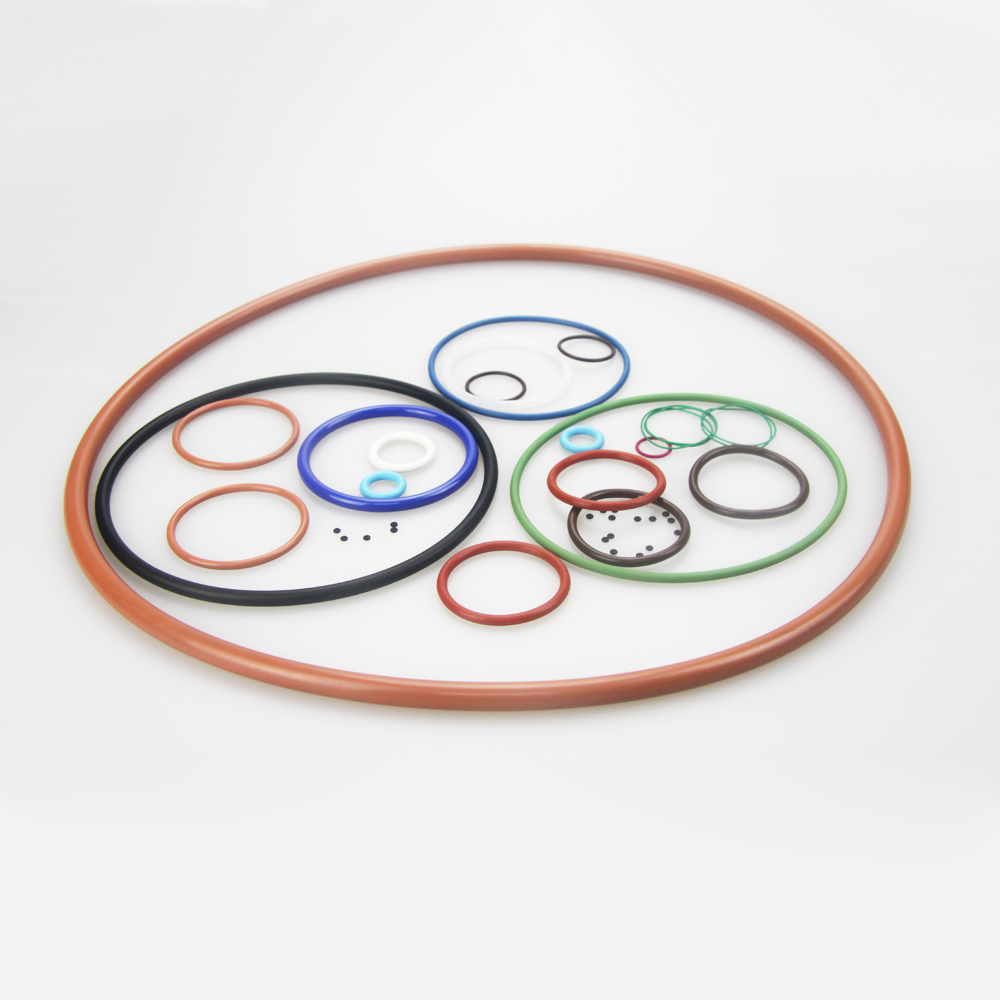
As a widely used basic sealing component, O-rings are governed by corresponding standard systems in different countries and industries. They are clearly classified by dimension, application scenario and functional characteristics. Below is a comprehensive analysis of the standards and classification system for O-rings.
Various countries have formulated dimension specifications for O-rings with distinct coding rules, which need to be distinguished during model selection:
- ISO 3601 International Standard: A globally applicable system divided into Class A (compatible with US standards) and Class B (optimized for metric system). A code such as "A-1234" indicates an inner diameter of 12.34 mm with a tolerance of 0.01 mm.
- US Standard AS568: Adopts hyphenated coding. A typical example AS568-214 represents an inner diameter of 1.9 inches and a cross-section diameter of 0.139 inches, covering three pressure-resistant series: 100, 200, and 900.
- Chinese National Standard GB/T3452.1: Uses the marking format of Inner Diameter × Cross-section Diameter, e.g., 7.5×1.8. The old national standard used outer diameter × cross-section diameter (e.g., 20×2.4), which has been replaced by the new standard.
- Japanese Standard JIS B2401: Split into Series P (dynamic sealing) and Series G (static sealing). For instance, P-25 stands for an inner diameter of 25 mm and a cross-section diameter of 3.5 mm.
German Standard DIN 3771: Marked as inner diameter × cross-section diameter plus material code. The example 15×3-N70 denotes nitrile rubber with a hardness of Shore 70.
II. Description of O-Ring Classification System
(1) Classification by Dimension Range
- Small size: Inner diameter 1.8–20 mm, e.g., specification 8×2.65;
- Medium size: Inner diameter 21.2–50 mm, e.g., specification 25×3.55;
- Large size: Inner diameter 51.5–133.4 mm, e.g., specification 133.4×1.8.
(2) Classification by Application Scenario
- General-purpose type: Complies with basic ISO/GB standards, the most commonly used basic type in industry;
- Aerospace type: Temperature resistance range from -65℃ to 275℃, representative model AMS7273-123;
- Semiconductor type: Metal ion leaching <0.01 ppb, for high-purity requirements, representative model Kalrez 6375;
- Nuclear power type: Resistant to 10 Gy radiation, representative model Zalutim HN200.
O-ring selection requires consideration of not only dimensions, but also matching standard codes, working temperature, pressure, medium, and sealing type. O-rings under different standards cannot be directly interchanged. For special scenarios such as high pressure, semiconductor, aerospace and nuclear power, special material grades shall be selected to meet the requirements of harsh environments.
Why do your seals fail?