
D-Ring a reliable solution in engineering machinery seals Field
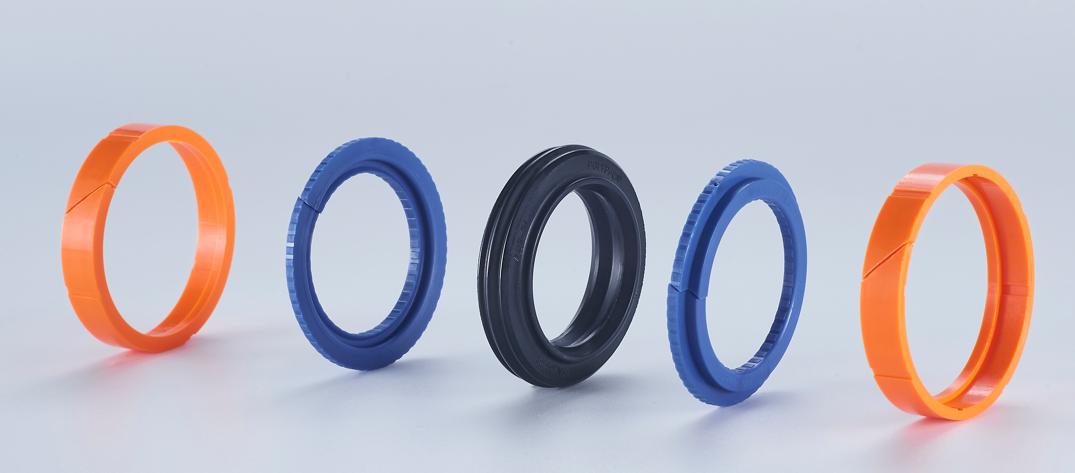
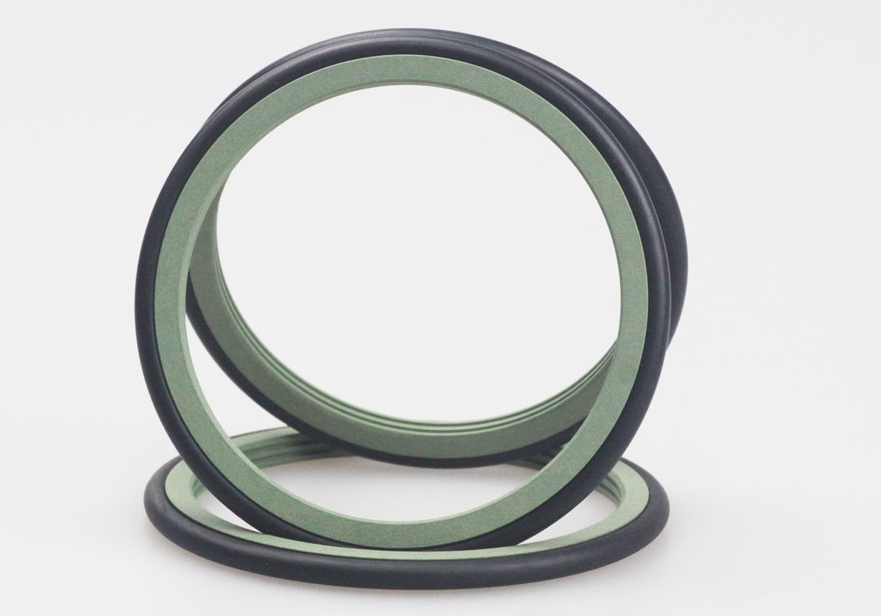
D- Ring, as the name suggests, is a sealing ring with a D-shaped cross-section. Essentially, it can be understood as a variant of the O-Ring with a square base. This special structure enables it to provide a larger base contact area than ordinary O-Rings, thereby effectively eliminating the possibility of twisting and spiral failure, and demonstrating excellent sealing performance under high-pressure and harsh working conditions.
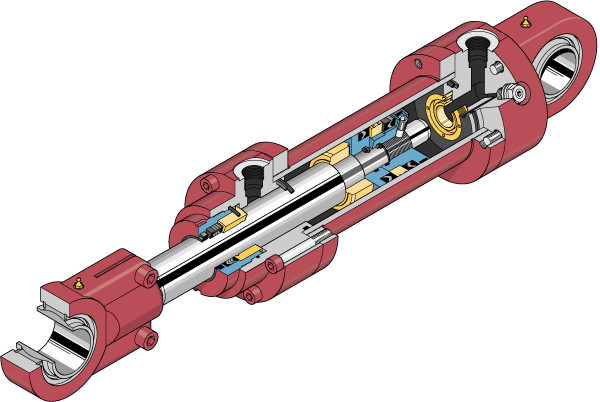
Compared with ordinary O-Rings, D-Rings have stronger shear resistance and can significantly reduce damage caused by twisting under sealing conditions. This allows it to provide more reliable sealing effects in reciprocating motion (dynamic sealing) such as piston rod sealing for hydraulic and pneumatic applications, as well as in other working environments where the performance of O-rings is insufficient.
- Structural Features and Working Principle
The structural design of the D-Ring skillfully combines the simplicity of O-Rings and the reliability of dedicated sealing. Its uniqueness lies in the combination of a rectangular base and an arc-shaped top. This design not only retains the elastic sealing characteristics of O-Rings but also improves anti-twisting capability by increasing the base contact area.
In terms of sealing mechanism, the D-Ring is a typical extrusion-type seal. During use, it generates initial contact stress through pre-compression. When the system pressure increases, the sealing ring is further pushed toward the sealing surface, enhancing the sealing effect.
The sealing performance of the D-Ring mainly depends on three key parameters. The first is pre-compression rate, which refers to the initial compression amount of the sealing during installation and is usually controlled at approximately 10%. The second is working medium pressure, which is the operating pressure inside the sealing system. The third is structural parameters, referring to the proportional relationship between the height of the rectangular base and the height of the cross-sectional arc. This parameter directly affects the overall performance of the sealing.
Under high-pressure working conditions, the cross-section of the D-Ring deforms significantly. To adapt to high-pressure environments, it is usually necessary to use a backup ring in conjunction to prevent extrusion damage.
2) Material Selection and Performance Optimization
The commonly used materials today are NBR (Nitrile Butadiene) and FKM (Fluoroelastomer). NBR is applied in general working conditions, mainly for oil and water resistance. FKM is primarily used in high-temperature working conditions (below 160°C).
The material selection of D-Rings is crucial to their sealing performance and service life. Based on different working conditions, engineers will choose different rubber materials to meet specific requirements.
To enhance the tear resistance of sealing rings and prevent large-scale tearing and damage, modern D-Rings usually incorporate framework materials inside. Nylon fiber is commonly used as the framework material, thanks to its advantages such as high breaking strength, good fatigue resistance, excellent elasticity and strong wear resistance. The selection of adhesives is also critical; dedicated adhesives like Chemlok 205 can ensure high bonding strength between rubber and fabric.
The manufacturing process of D-Rings is also highly sophisticated. From the preparation of mixed rubber, the production of rubber compound, the surface treatment of framework fabric to vulcanization molding, each link requires precise control. The mold design usually adopts a three-section split combined structure to ensure convenient molding and effective bonding between rubber compound and fabric under specific process conditions.
3)Installation and Maintenance Key Points
Proper installation and maintenance are critical to ensuring the D-Ring delivers optimal performance.
When installing the D-Rng, the following professional specifications must be followed:
Installation with dedicated tools: Use socket tools and avoid direct prying with a screwdriver to prevent damage to the sealing ring. Professional seal installation kits include guide sleeves of various sizes to ensure damage-free installation.
Surface treatment: The surface roughness of the shaft should be controlled between Ra 0.2-0.8 μm, and the hardness should not be lower than HRC 45. Advanced laser texturing treatment can form micro oil-storing pits, reducing the friction coefficient by up to 30%.
Standardized lubrication: Apply lubricating grease of the same system during installation, filling approximately 50% of the seal cavity space. This ensures smooth installation of the sealing ring and reduces initial wear.
Direction confirmation: Pay attention to the direction mark on the sealing ring. Incorrect installation direction will result in poor sealing performance or even damage to the sealing ring.
For maintenance, it is recommended to check the condition of the sealing ring regularly. According to professional maintenance manuals, the elasticity of the dust seal should be inspected every 500 working hours. The seal should be replaced immediately if the lip deformation exceeds 15% of its initial height. Regular pressure testing helps detect potential issues in a timely manner and prevents system failures.
4)Technological Development and Future Outlook
With the advancement of materials science and engineering technology, technological innovation for D-Rings continues to progress.
As industrial equipment develops toward higher pressure, higher temperature, and higher speed, it imposes higher requirements on sealing technology. As a mature and reliable sealing solution, D-Rings will continue to play a key role in various industrial fields. Their technology itself will also undergo continuous innovation and improvement with the advancement of materials science and manufacturing technology.
The future development of D-Rings will focus on material innovation and structural optimization. With the widespread application of high-performance materials such as HNBR and the maturity of fabric skeleton reinforcement technology, D-Rings can now maintain stable performance under extreme working conditions. As shown in the application case of seawater butterfly valves in nuclear power plants, their service life can reach 10 years, significantly reducing maintenance frequency and operating costs.
With the improvement of manufacturing technology levels, the manufacturing process of D-Rings will become more precise. Improvements in mold design and vulcanization processes will further enhance the consistency and reliability of products.
Rubber and Plastic Seals
Hydraulic Cylinder Seals for Construction Machinery