
How to Select Seals
Many purchasers and engineers share the same confusion: there is a wide variety of seals in different models, materials and manufacturing processes, including O-rings, oil seals, turned seals, molded seals, dust seals and combined seals. Despite the abundant options, it is easy to make inappropriate choices, leading to oil leakage, air leakage, equipment failure and repeated part replacement. In fact, there is no need to memorize all seal categories or get confused by numerous types. You can make accurate and error-free choices by focusing on the core working conditions.
The core principle of seal selection is not to pick the most expensive or highest-grade product, but to match the actual equipment working conditions. All differences in seal design are tailored to adapt to varying pressure, temperature, movement modes and working media. You only need to focus on four key dimensions to select the most suitable seals quickly.
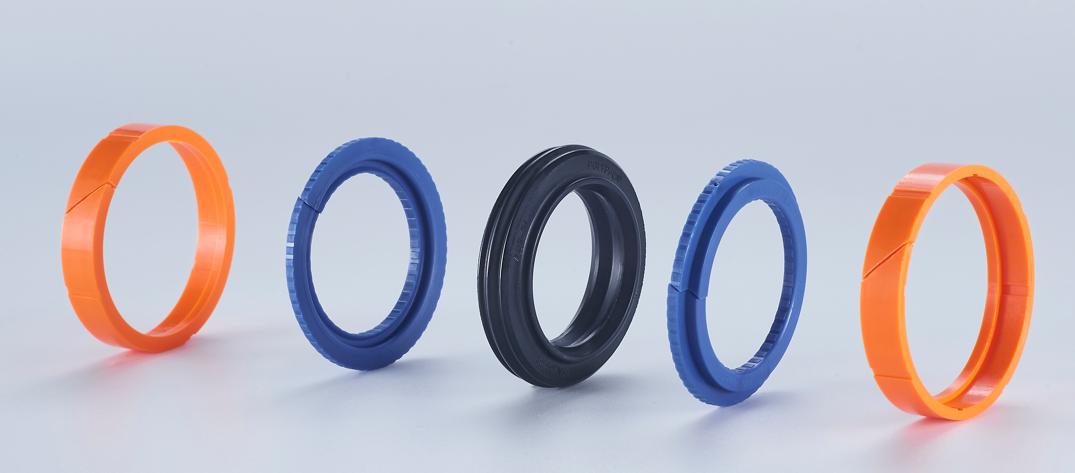
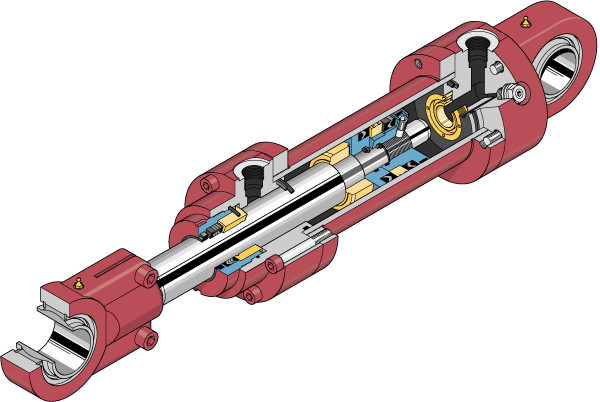
First, check the movement mode, the basic prerequisite for selection. Equipment sealing scenarios are mainly divided into static sealing and dynamic sealing. Static sealing applies to stationary parts such as flanges, end covers and fixed joints. Molded O-rings, flat gaskets and fixed rubber rings are the preferred options here, featuring good elasticity, excellent compression sealing performance and high cost performance, which fully meet the requirements of static sealing. Dynamic sealing is used for moving parts including oil cylinders, piston rods and air cylinders with reciprocating or rotating motion. Such scenarios require higher precision, wear resistance and extrusion resistance. Ordinary molded standard seals are prone to wear and leakage, so high-precision turned seals, combined oil seals and professional reciprocating seals are more suitable, which greatly improve service life and sealing stability.
Second, confirm the working pressure, which determines the manufacturing process and structure of the seal. For low and normal-pressure equipment, conventional molded rubber seals are sufficient for daily use with outstanding elastic resilience and stable performance. For high and ultra-high pressure equipment used in engineering machinery, wind power and hydraulic systems, molded seals are prone to deformation, extrusion and leakage. In this case, high-precision turned seals with denser material and tighter dimensional tolerance, matched with back-up rings, are required to resist high-pressure impact and avoid sealing failure.
Third, consider the working medium and temperature, which directly determine the seal material selection. NBR (Nitrile Butadiene Rubber) is the most versatile and cost-effective material for conventional scenarios with engine oil, hydraulic oil and normal temperature. FKM (Fluoroelastomer) is recommended for high-temperature environments, diesel and corrosive media due to its superior high-temperature resistance and corrosion resistance. For extreme working conditions such as strong acid and alkali, chemical solvents and extreme high and low temperatures, special materials including PTFE and polyurethane shall be adopted to prevent material aging, swelling and cracking.
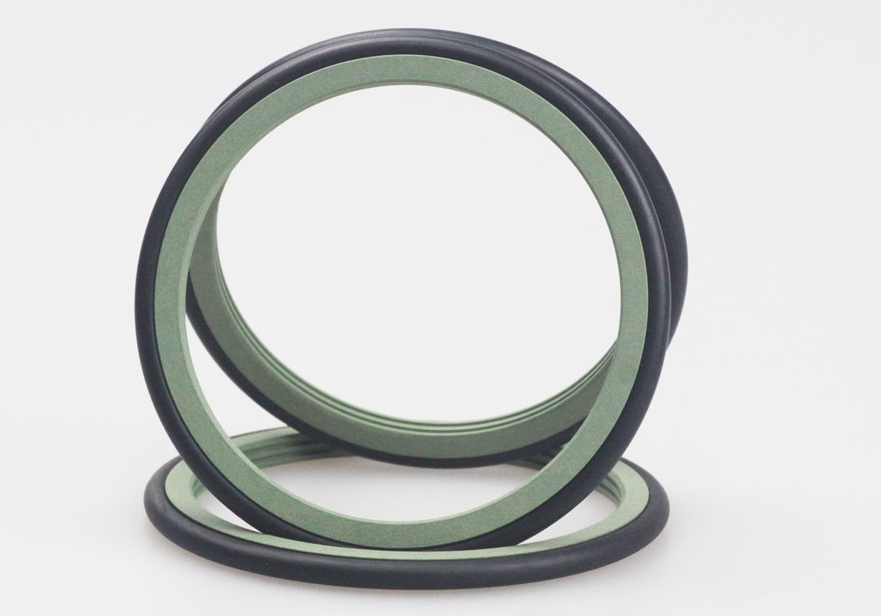
Finally, optimize the selection scheme based on batch quantity and dimensional requirements. Molded seals are the best choice for standard-size and mass-produced general parts, with mature mass production technology, low cost and stable supply. For non-standard sizes, large-diameter, special-shaped cross-section and small-batch customized demands, turned seals are the ideal solution. They require no mold development, feature flexible customization and high precision, and are perfectly adaptable to various non-standard equipment requirements.
In conclusion, you do not need to be troubled by various seal types. Keep the core selection rules in mind:choose molded seals for static scenarios and high-precision turned seals for dynamic scenarios; adopt ordinary rubber seals for low pressure and precision turned seals for high pressure; use NBR for normal-temperature general working conditions and special materials for extreme environments. Selecting seals according to actual equipment working conditions instead of complicated categories helps you pick durable, leakage-proof and cost-effective products, fundamentally reducing equipment failure rate and replacement costs.
The Application for Spring Seals
Why Spring Energized Seals Are Becoming More and More Popular