
Why does the Glyd Ring/GSF achieve nearly zero friction?
Some equipment simply cannot tolerate even this small amount of friction. Servo hydraulic cylinders require micron-level positioning; injection molding machines need stable and quiet mold opening and closing; food and pharmaceutical production lines must not leak a single drop of oil. This is where the “low-friction champion” among seals comes in: the GSF Piston seal. Its sliding friction coefficient can be as low as 0.02~0.1, which engineers often describe as “near-zero friction”. How exactly does it achieve this?
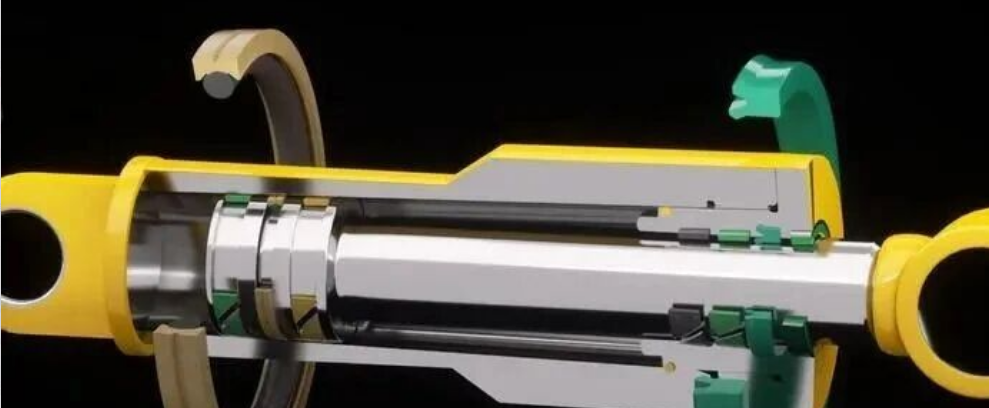
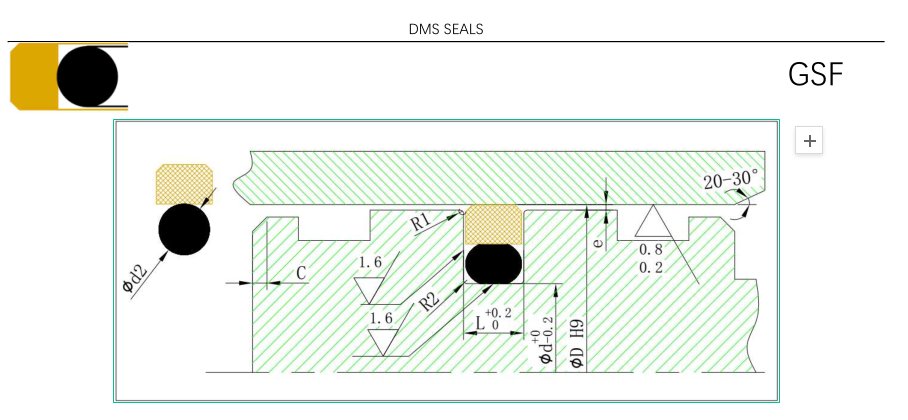
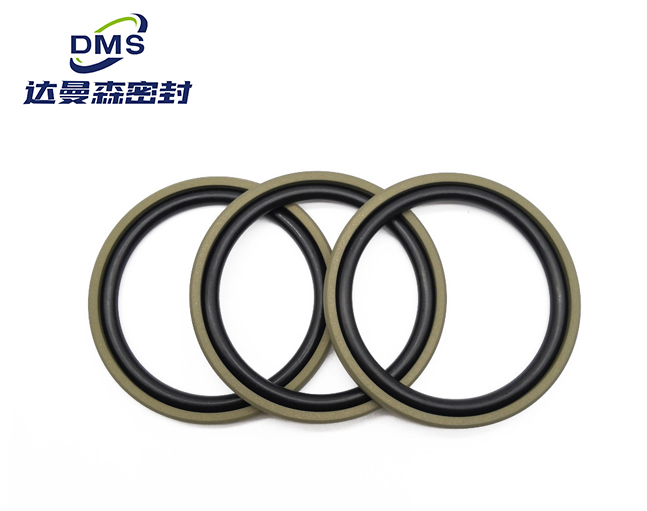
Ⅰ. GSF Bi-Directional Piston Seal — A Composite Seal, Not a Single Rubber Piece
It consists of two components:
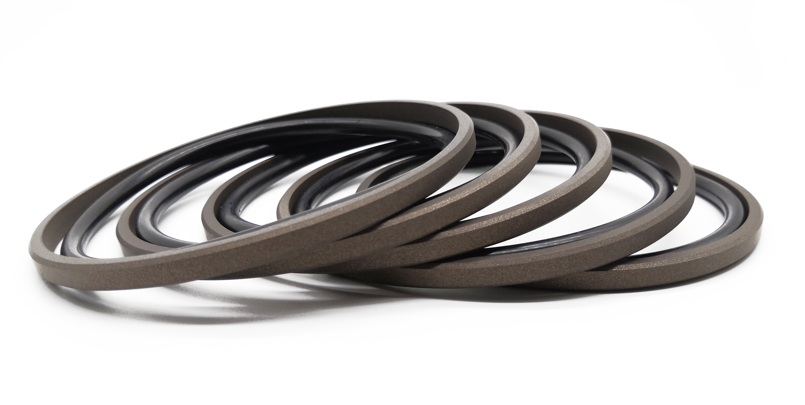
- Outer part: PTFE sliding ring (commonly known as Teflon). It is a thin, split or solid square/rectangular sliding ring, which is the component that directly contacts and slides against the cylinder bore.
- Inner part: Rubber O-ring (usually NBR or FKM). Housed in the groove behind the sliding ring, it pushes the sliding ring against the cylinder wall.
In short: PTFE takes care of sliding, while the O-ring provides preload — each has its own function. It is a double-acting seal, capable of sealing on both sides of the piston.
Ⅱ. Where Does Friction Come From in Conventional Seals?
To understand why the GSF slides so smoothly, we first need to examine the friction mechanism of ordinary seals:
Rubber lip direct scraping: Lip seals and oil seals rely on an elastomer lip pressed onto the mating surface. During sliding, the rubber is continuously compressed and rebounds, creating high viscous drag.
Stick-slip effect: This manifests as jerky cylinder movement and positioning jitter.
Large contact area: The lip makes strip contact. The higher the pressure, the tighter the contact, and the greater the friction.
Ⅲ. Three Secrets Behind the Near-Zero Friction of the GSF
1: Inherent self-lubrication of PTFE
PTFE is one of the solid materials with the lowest known friction coefficients. It has natural non-stick properties. It can slide smoothly even with no lubrication at all and will not generate stick-slip with metal surfaces. This is the fundamental reason for its low friction.
2: The O-ring only supplies preload force and does not slide**
This is its most ingenious design feature. The rubber O-ring stays inside the groove and does not slide relative to the cylinder bore. It only applies preload to force the PTFE sliding ring against the sealing surface. Only the PTFE ring slides, with very little resistance. In other words: the sliding duty falls on low-adhesion Teflon, while the rubber element stays behind and avoids sliding friction.
3: Surface contact with no oil-scraping lip**
The thin rectangular-section sliding ring sits flat against the cylinder bore in surface contact, unlike elastomer lips that keep scraping. There is no aggressively pressed lip repeatedly wiping oil away. Viscous drag and heat generation are greatly reduced, with low breakaway friction and low dynamic friction.
Ⅳ,Trade-offs and Limitations: It Is Not a Universal Solution,
The so-called near-zero friction comes with trade-offs that must be considered during selection:
- PTFE cold flow: It undergoes slow deformation under sustained compression. The groove must constrain the sliding ring to prevent extrusion.
- Slightly higher breakaway friction: After stationary dwell, the PTFE slightly conforms to the mating surface, so friction at the instant of start-up is higher than dynamic friction (though still far lower than rubber lips).
- Susceptible to extrusion under high pressure: PTFE is rigid but not highly resistant to extrusion. At pressures above approximately 35 MPa, back-up rings are required.
- For reciprocating motion only, not rotary service: The GSF is a reciprocating seal and not suitable for rotating shafts.
Ⅴ Typical Applications Where It Is Indispensable
|
Application |
Reason for selecting GSF |
|
Servo hydraulic cylinders |
Micron-level positioning; stick-slip and jitter are unacceptable |
|
Injection molding / die-casting machines |
High-frequency reciprocation, low heat generation and low energy consumption |
|
Food & pharmaceutical equipment |
Oil-free operation; PTFE is clean and self-lubricating |
|
Long-stroke air cylinders |
Low friction minimizes thrust loss and extends service life |
How to Calculate O-Ring Compression and Choose the Right Squeeze Percentage