
Can O-Rings Be Used for Rotary Shaft Sealing? 5 Risks and Better Alternatives
However, a common question arises when selecting seals for rotating equipment:
Can a standard O-ring be used as a rotary shaft seal?
The answer is yes, but only under very limited operating conditions.
Although O-rings can provide effective sealing in static applications, reciprocating systems, and certain low-speed rotary applications, they are generally not recommended as the primary sealing solution for continuously rotating shafts.
Using a standard O-ring directly against a rotating metal shaft can lead to excessive friction, heat generation, premature wear, and leakage.
In this article, we explain how O-rings work, examine five major risks of using them in rotary shaft applications, identify the limited conditions in which they may be acceptable, and introduce more reliable rotary sealing alternatives.
1. How Does an O-Ring Work?
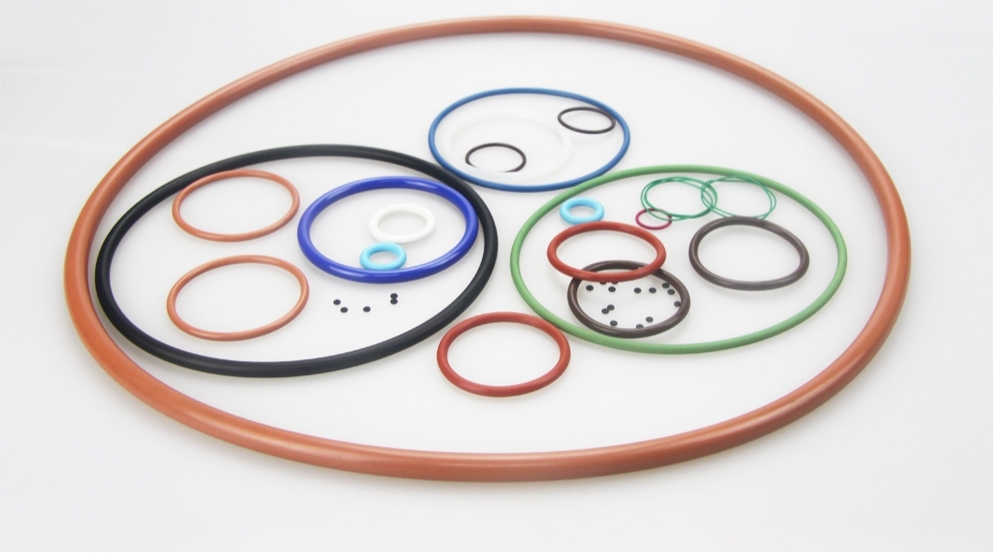
An O-ring is an elastomeric sealing component with a circular cross-section. Its sealing performance primarily comes from the compression applied when it is installed in a groove.
When compressed between two mating surfaces, the O-ring generates an initial contact pressure that prevents fluid or gas from passing through the sealing interface.
As system pressure increases, fluid pressure can further energize the O-ring against the sealing surfaces, improving its sealing capability.
This principle is commonly referred to as the self-energizing sealing effect.
O-rings are typically used in three types of applications:
-
Static sealing: Between components that do not move relative to each other.
-
Reciprocating sealing: In applications involving controlled back-and-forth movement.
-
Low-speed rotary sealing: In specially designed applications where operating speed, pressure, lubrication, and other conditions are carefully controlled.
However, the circular cross-section that makes O-rings simple and versatile also creates limitations in continuous rotary applications.
2. Five Major Risks of Using O-Rings for Rotary Shaft Sealing
Risk 1: Excessive Friction and Heat Generation
When a shaft rotates, the inner surface of the O-ring continuously rubs against the metal shaft.
This contact generates frictional heat.
Because elastomeric materials generally have relatively low thermal conductivity, heat may accumulate near the contact area, especially at higher rotational speeds or when lubrication is insufficient.
Over time, excessive temperature can cause:
-
Accelerated rubber aging
-
Hardening and loss of elasticity
-
Permanent deformation or compression set
-
Surface cracking and premature seal failure
As rotational speed increases, frictional heating can become a major limiting factor.
Key takeaway: Standard O-rings are generally unsuitable for continuous high-speed rotary applications because they are not specifically designed to manage sustained friction and heat.
Risk 2: No Specialized Sealing Lip to Maintain a Stable Lubricating Film
Unlike dedicated rotary shaft seals, standard O-rings do not have a specially engineered sealing lip.
Rotary oil seals and certain PTFE lip seals use carefully designed contact geometries to control sealing pressure and support lubrication at the shaft interface.
Some rotary shaft seals also incorporate a garter spring to maintain contact pressure as the sealing lip wears.
A standard O-ring, by comparison, relies mainly on compression between the shaft and the groove.
It does not provide the same degree of control over the sealing contact area.
Consequently, the lubricating film may become unstable or break down during operation.
This can result in increased friction, accelerated wear, and inconsistent sealing performance.
Key takeaway: Dedicated rotary shaft seals are designed to manage the dynamic contact between the seal and rotating shaft, whereas standard O-rings have limited ability to control this interface.
Risk 3: Insufficient Lubrication and Rapid Wear
Lubrication is essential in many rotary sealing applications.
A suitable lubricating film helps reduce direct contact between the sealing material and the shaft, minimizing friction and heat generation.
When an O-ring operates against a rotating shaft without adequate lubrication, dry friction can develop.
This may cause:
-
Rapid wear of the O-ring surface
-
Excessive temperature at the sealing interface
-
Damage to the shaft contact surface
-
Reduced service life
-
Leakage or complete sealing failure
Even when lubrication is initially present, inadequate replenishment or an unstable lubricant supply can reduce sealing reliability.
Key takeaway: A standard O-ring should not be used as a continuously rotating dynamic seal in dry-running conditions unless the complete sealing system has been specifically engineered and validated for that purpose.
Risk 4: Twisting, Rolling, and Spiral Damage
One of the mechanical limitations of O-rings in dynamic applications is their tendency to twist or roll inside the sealing groove.
During rotary motion, uneven frictional forces may cause the O-ring to move or deform rather than remaining stable in its intended position.
This can lead to:
-
Twisting inside the groove
-
Localized stretching and deformation
-
Irregular surface wear
-
Spiral-shaped damage
-
Loss of sealing contact
Once twisting or rolling begins, repeated rotational movement can accelerate damage and shorten the seal's operating life.
Key takeaway: Proper groove design is critical for dynamic O-ring applications, but standard O-rings remain more vulnerable to twisting and rolling than purpose-designed rotary sealing components.
Risk 5: Limited Ability to Accommodate Shaft Runout and Eccentricity
In real industrial equipment, rotating shafts rarely operate with perfect alignment.
Small amounts of shaft runout, eccentricity, and vibration can occur during normal operation.
These variations affect the contact pressure between the shaft and the sealing element.
For standard O-rings, shaft eccentricity can cause excessive compression on one side while reducing contact pressure on the opposite side.
The result may be uneven wear, localized overheating, and leakage.
By contrast, appropriately designed rotary lip seals can accommodate specified levels of shaft movement through flexible sealing lips and, in some designs, spring-assisted contact pressure.
Key takeaway: When shaft runout or eccentricity is present, a dedicated rotary shaft seal is generally a more reliable choice than a standard O-ring.
3. When Can an O-Ring Be Used for Rotary Sealing?
Despite these limitations, O-rings are not completely excluded from rotary applications.
Under carefully controlled conditions, a properly selected and installed O-ring may provide acceptable performance.
Such applications generally involve a combination of the following conditions:
|
Operating Factor |
Recommended Condition |
|---|---|
|
Rotational speed |
Low-speed operation |
|
Operating duration |
Short or intermittent operation |
|
System pressure |
Low pressure |
|
Lubrication |
Adequate and continuous lubrication |
|
Shaft alignment |
Minimal runout and eccentricity |
|
Leakage requirements |
Minor leakage is acceptable |
|
Operating temperature |
Within the selected elastomer's allowable range |
These conditions should be considered together rather than individually.
For example, an O-ring operating at low speed may still fail prematurely if lubrication is insufficient or shaft eccentricity is excessive.
Similarly, adequate lubrication does not automatically make an O-ring suitable for high-speed or high-pressure rotary service.
Important: There is no single universal rotational speed or pressure limit that determines whether an O-ring is suitable for every rotary application. Actual suitability depends on seal material, groove geometry, shaft dimensions, lubrication, temperature, and operating conditions.
For equipment requiring continuous rotation, long service life, or highly reliable leakage prevention, purpose-designed rotary seals should be considered first.
4. Better Alternatives to O-Rings for Rotary Shaft Sealing
Choosing the correct sealing solution is essential for maintaining equipment reliability and minimizing maintenance costs.
Three commonly used alternatives are rotary shaft oil seals, PTFE lip seals, and mechanical seals.
4.1 Rotary Shaft Oil Seals
Best for: General-purpose rotating equipment
Rotary shaft oil seals, also known as radial shaft seals, are widely used in motors, gearboxes, pumps, and other rotating machinery.
They typically feature a flexible sealing lip, and many designs include a garter spring to maintain contact with the shaft. Suitable designs can retain lubricants while helping prevent dirt and other contaminants from entering equipment.
4.2 PTFE Rotary Lip Seals
Best for: Demanding speed, temperature, and chemical conditions
PTFE (polytetrafluoroethylene) rotary lip seals offer excellent chemical resistance and low-friction characteristics.
Depending on their design, they can be suitable for high-speed rotation, elevated temperatures, or environments containing chemically aggressive media. Performance depends on the specific PTFE compound and sealing configuration.
4.3 Mechanical Seals
Best for: High-pressure and demanding leakage-control applications
Mechanical seals are commonly used in chemical processing equipment, industrial pumps, and mixing systems.
Instead of relying on a rubber ring sliding directly along a rotating shaft, mechanical seals use specially engineered sealing faces, typically with one rotating face and one stationary face.
They can provide very low leakage under suitable operating conditions. O-rings may still be incorporated into mechanical seal assemblies as secondary sealing elements, without acting as the primary rotating sealing interface.
5. O-Rings vs. Rotary Shaft Seals: Quick Comparison
The following table provides a general comparison of common sealing solutions.
|
Seal Type |
Main Advantages |
Typical Applications |
|---|---|---|
|
Standard O-ring |
Simple, economical, versatile |
Static sealing, limited low-speed rotary applications |
|
Rotary shaft oil seal |
Designed for rotary contact, lubricant retention |
Motors, gearboxes, pumps |
|
PTFE rotary lip seal |
Low friction, chemical and temperature resistance |
Demanding industrial rotary systems |
|
Mechanical seal |
Engineered face sealing, excellent leakage control |
Pumps, mixers, chemical processing equipment |
The most suitable sealing solution depends on the specific operating environment. No single seal design is ideal for every application.
6. Key Factors to Consider When Selecting a Rotary Shaft Seal
Before selecting a seal for rotating machinery, engineers and maintenance professionals should evaluate the actual operating conditions.
The most important parameters include:
-
Shaft diameter: Determines the dimensional requirements and compatibility of the seal.
-
Rotational speed (RPM): Influences friction, heat generation, and seal wear.
-
Operating temperature: Affects material selection, elasticity, and service life.
-
Sealed medium: Determines the chemical compatibility requirements for the sealing material.
-
Lubrication method: Influences friction control, heat dissipation, and the stability of the sealing interface.
-
System pressure: Affects seal loading, deformation, and the required sealing design.
-
Shaft runout and eccentricity: Determine how much shaft movement the seal must accommodate.
These factors should be evaluated together, along with relevant shaft surface conditions and installation requirements, before making a final selection.
Choosing the correct sealing solution from the beginning can help reduce unexpected leakage, premature wear, equipment downtime, and maintenance costs.
7. Conclusion: Choose the Right Seal for the Right Application
O-rings are highly effective and economical sealing components, but their advantages do not make them suitable for every sealing application.
When a standard O-ring is used directly against a continuously rotating shaft, it may experience excessive friction, heat buildup, insufficient lubrication, twisting, and uneven wear caused by shaft misalignment.
While O-rings may be suitable for carefully controlled low-speed, short-duration, low-pressure rotary applications with sufficient lubrication, they should not be the default choice for demanding rotary shaft sealing.
For continuously rotating machinery, rotary shaft oil seals, PTFE lip seals, and mechanical seals generally offer more appropriate solutions, depending on the operating requirements.
The key to reliable sealing is not simply selecting a seal that fits. It is selecting a seal designed for the operating conditions.
Need Help Choosing the Right Rotary Seal?
At Foshan Damansen Sealing, we understand the importance of selecting suitable sealing components for different industrial applications.
Whether you need O-rings, rotary shaft oil seals, PTFE sealing solutions, or guidance on sealing material selection, choosing the right product starts with understanding your equipment's operating conditions.
Contact our team to discuss your shaft diameter, rotational speed, operating temperature, pressure, sealed medium, and lubrication requirements.
Contact Foshan Damansen Sealing for rotary sealing product information and selection assistance.
Analysis of O-Ring Standard Specifications and Dimensions