
How Spring Seals works
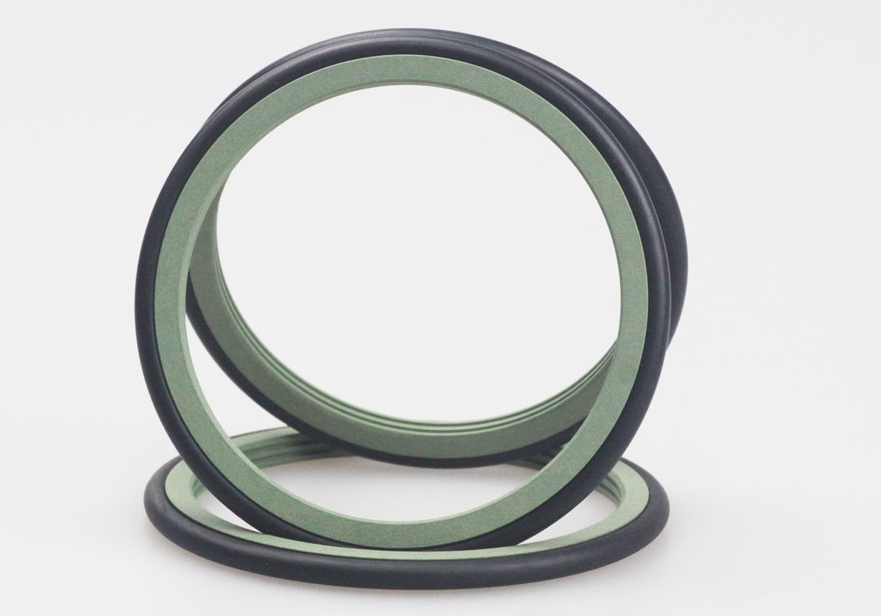
"Spring Variseal" refers to a sealing ring with a spring. It is a typical combination structure seal with complementary materials. Spring seal materials have many advantages, but they are too hard and lack resilience, so a spring is needed for compensation.
The working principle of Spring Seal is as follows: When the system is not pressurized, the Spring Seal provides an initial sealing force through the interference of the built-in elastic element, making the lip tightly fit against the mating surface. When the system is pressurized, the medium pressure exerts forces in all directions within the groove of the Spring Seal, causing the lip to seal against the mating surface. The higher the system pressure, the greater the force.
Spring Seals offer several advantages:
1. Wide temperature range: Different materials can withstand temperatures ranging from -200°C to over 300°C.
2. Lower coefficient of friction compared to rubber and polyurethane.
3. Long service life: Commonly used materials for spring seals are filled PTFE and stainless steel. These materials have a very long service life and can withstand various media and harsh working environments.
4. Wide pressure range: Spring seals provide good sealing performance at both high and low pressures with minimal leakage. Standard designs typically withstand 20-30 MPa, and by modifying design parameters, pressure resistance can reach over 100 MPa.
5. Small mounting groove: Reduces the overall weight of the equipment. In many cases, the mounting groove is the same as that of ordinary O-rings.
- Low starting resistance: Minimal difference between dynamic and static friction coefficients results in smooth, vibration-free start-up and operation, making it suitable for high-speed cylinders.
The disadvantages of pan-sealing are: firstly, it requires the design of open or semi-open grooves; secondly, it relies on turning for forming, which is inefficient and costly.
What Constitutes a Qualified Sealing Component?
U- Seals Application in Engineering Machinery Hydraulic Systems