
Single acting vs Double acting Seals: How to Distinguish & Application
When selecting hydraulic seals for hydraulic cylinders and construction machinery overhaul kits, single acting and double acting seals are among the most easily confused basic knowledge. Wrong selection will directly cause lip roll over, oil leakage and premature seal failure.
Single‑acting Seal
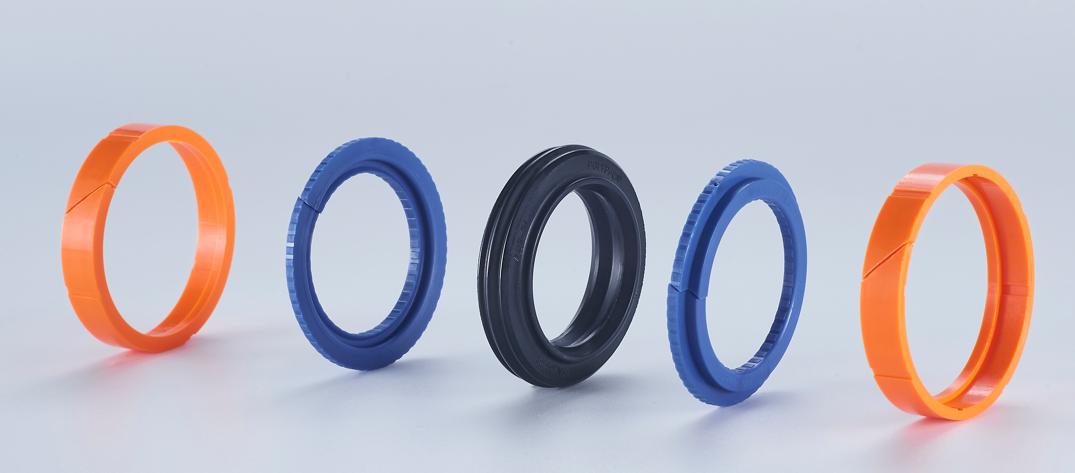
Typical products: UHS, UNS, DHS,, DKB, TC / SC oil seals.
These seals feature an asymmetrical cross‑section with an open U‑shaped lip. Sealing is achieved when system pressure pushes against the lip and presses it tightly against the mating surface.
It can only withstand pressure from the lip side. If pressure acts from the opposite direction, the lip will flip open and lead to leakage.
Main applications
1. Rod seals for cylinder rods: DKB, HBY, UHS. Pressure comes only from inside the cylinder while the outer side is exposed to air.
2. Shaft oil seals TC/SC for pumps and motors, sealing internal lubricant against atmospheric environment.
3. Single‑acting cylinders which retract by spring force or gravity.
> Important note: Never fit single‑acting seals on pistons of double‑acting cylinders. Reversed pressure will damage the sealing lip quickly.
Double‑acting Seal
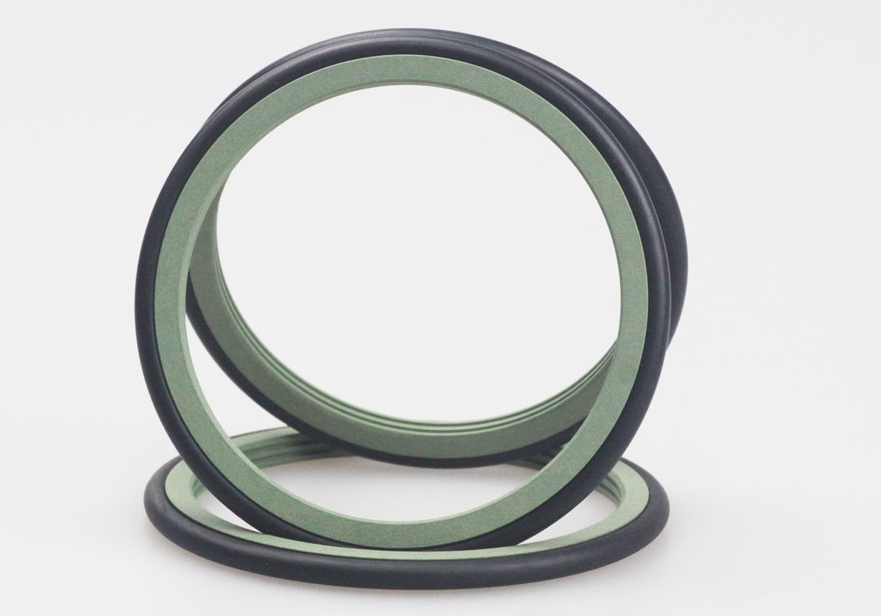
Typical products: Glyd rings, KDAS seals, SPGW ,ect.
Consisting of a flat PTFE slide ring plus an elastic O‑ring energizer. There is no directional lip. The O‑ring provides pre‑load force. Pressure from either side can compress the PTFE ring against metal surfaces, so the seal can hold pressure in both directions.
Main applications
1. Piston seals for double‑acting hydraulic cylinders widely used in excavators and loaders. Both sides of the piston are alternately under high pressure during reciprocating movement.
2. Internal sealing positions inside hydraulic motors and piston pumps with bidirectional pressure load.
> Practical tip: Double‑acting seals are mostly installed in piston bore. They are rarely used as rod seals.
Practical Tips for Sourcing
1. Rod seal requirements: single‑acting seals are the mainstream choice.
2. Piston seal requirements: double‑acting seals are preferred for most construction‑machinery working conditions.
3. For physical samples: identify by checking whether there is an open U‑lip.
SPGW Combined Seal First Choice for Heavy-Duty and Long-Stroke Hydraulic Cylinders